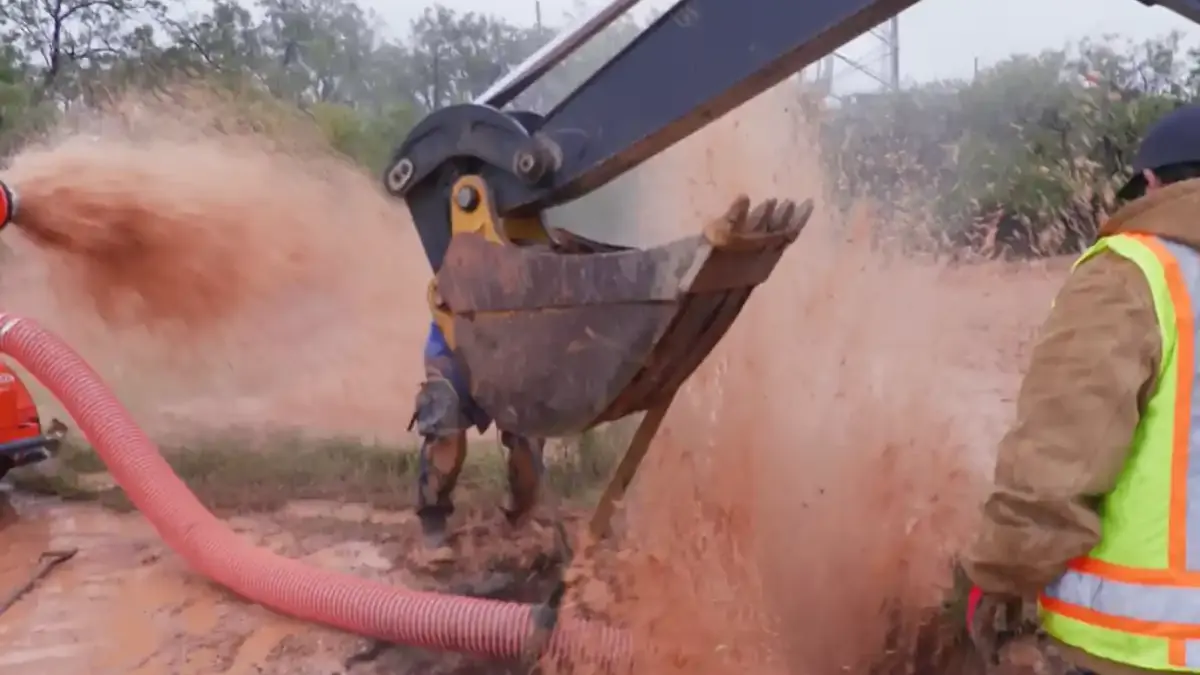
An underground water leak is a break in the service line or a buried yard line, and it can waste a lot of water before anything shows on the surface. Because the pipe is out of sight, most people find out from a high water bill, low pressure or a soggy patch of lawn.
In Maywood, IL the first step is to learn which side of the curb the leak is on, since the village and the homeowner are responsible for different parts. This guide covers the signs, a meter test you can do yourself and what a plumber does to pinpoint the leak without digging up the yard.
Signs of a buried leak
What a buried leak looks like
- A wet, spongy or unusually green strip of lawn with no rain.
- A water bill that rises with no change in use.
- Low water pressure throughout the house.
- The sound of running water when everything is off.
- A meter that moves when all fixtures are closed.
- Cracks, sunken pavement or a damp spot along a foundation.
The meter test
- Turn off every water useStop the washer, dishwasher and ice maker and close all taps.
- Find the meterIt is usually in the basement near where the line enters.
- Note the readingWatch the small leak indicator, or write down the numbers.
- Wait fifteen minutesUse no water.
- Read againIf the dial moved, water is going somewhere.
- Close the main valve insideIf the meter still moves with the house valve closed, the leak is outside, between the meter and the main valve at the street side.
How plumbers pinpoint the leak
Plumbers use acoustic listening gear to hear water escaping a buried pipe, and they can mark the spot on the ground. A pressure test isolates the section. In some cases, tracer gas or thermal imaging adds confirmation.
The goal is a small, targeted excavation. If the line is old galvanized steel or lead, the plumber may suggest replacing it entirely, since a leak in one place often means others will follow. See leak detection and water service line repair.
| Method | What it finds | Limitation |
|---|---|---|
| Acoustic listening | Sound of escaping water | Noise from traffic can interfere. |
| Pressure test | Which section leaks | Does not give exact spot. |
| Thermal imaging | Hot line leaks | Works best on hot lines. |
| Tracer gas | Gas rising at the leak | Needs soil that lets gas through. |
What to do while you wait
If you suspect a leak, close the main valve inside the house and check whether the pressure and the meter calm down. Avoid using the lawn sprinklers or a water-using appliance until the leak is found. Photograph the wet area and the meter reading with the date.
Mark any soft ground so no one drives a heavy vehicle over it. Sinkholes from a leaking line can open under a driveway.
Repair options
A leak on a sound line may be fixed with a small section replacement. A line in poor shape may be replaced fully, with trenchless methods when the soil and route allow. After repair, the plumber pressure tests the line and you can watch the meter to confirm the leak is gone.
Telling a leak from a seasonal wet spot
A wet patch in the yard is not always a leak. Poor drainage, a downspout discharge, a sprinkler head or a spring thaw can all soak the ground. A leak tends to produce a patch that stays wet in dry weather, that stays the same size whether or not it rained and that may be warm in winter if a hot line is involved.
Check the sprinkler system first by closing its valve and watching the meter. If the meter stops, the sprinklers were the source. If it does not, the leak is on the supply line or inside the house.
Make a note of when the wet area first appeared. A plumber uses that timeline, along with the bill history, to estimate how long the leak has been running.
Costs of waiting
A leak that runs unnoticed wastes water, and the bill reflects it. It can also undermine soil under a driveway or a slab, causing settling and cracks. The cost of a small repair today is usually far below the cost of repairing the damage a long-running leak causes.
If you cannot find the source, do not keep guessing. Call for leak detection and let the equipment do the searching.
Protecting yourself from the next one
Know where your meter and main shutoff are, and test the shutoff once a year so it does not seize. Read the meter on the first of each month and write the number down. A jump you cannot explain is an early warning.
Consider a water leak sensor or a smart shutoff valve on the main. These devices watch flow and can close the valve if water runs for too long. They do not replace a repair, but they limit the damage while you arrange one.
Information that helps the plumber
Before the visit, gather your last six water bills, the meter reading you took and the location of the main shutoff. Note any wet spots, soft ground or changes in pressure, and when you first saw them. A short list saves search time and reduces the cost of the visit.
If the house is older, mention what pipe material you know of. Galvanized, copper and lead lines behave differently under a listening device.
How the standard test works
The accepted first test is the meter check. With every fixture off, a moving dial or a spinning low flow indicator means water is leaving the system somewhere. Repairs to a buried service line then follow the Illinois Plumbing Code.
Who owns the line in Maywood
In 2022 the Village of Maywood fixed 13 water main breaks and repaired 29 buffalo boxes, the small access pipes that hold the curb stop. Those repairs sit on the village side of the line. From the curb stop to your house, the service line is generally the property owner's responsibility.
The Cook County hazard plan notes that some Maywood mains were installed before 1920. Ask the village water department about your block's history if you suspect a leak near the street.
Sources: Village of Maywood 2022 system work summary and Cook County Multi-Jurisdictional Hazard Mitigation Plan, Maywood annex.
Meter running with everything off? Call us.
Call (855) 575-2890Underground leak questions in Maywood
Generally the village maintains the main and the curb stop, and you maintain the line from the curb stop to the house. The water department can confirm.
Yes. Listening gear and pressure testing locate it, and the dig is limited to the spot.
Months, in some cases. The bill is often the first sign.
No, but it is the first thing to check. Do the meter test.
Suspect a buried leak? Call us. Call (855) 575-2890