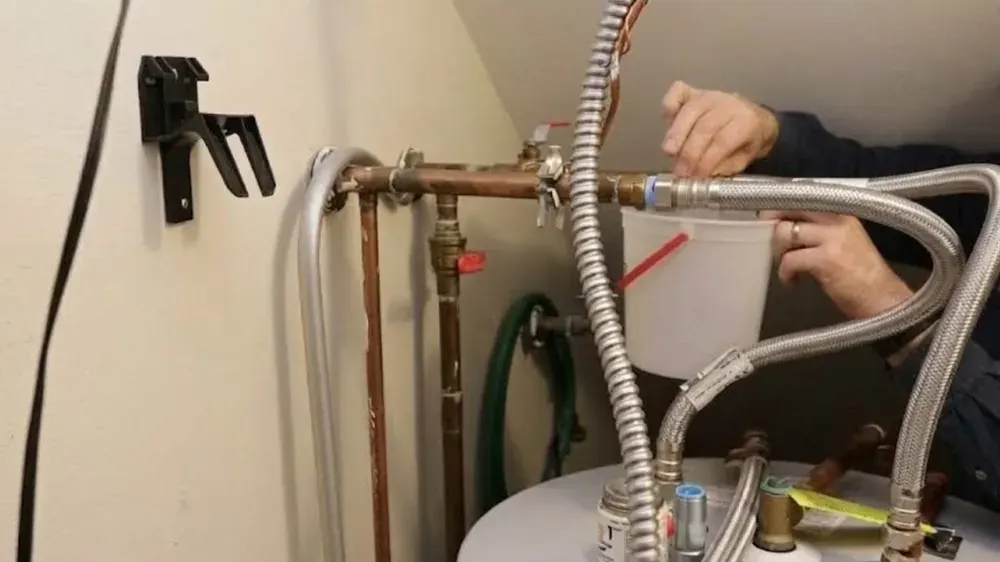
Water heater repair in Maywood, IL covers the problems that stop a tank from making hot water or make it leak. Typical causes are a dead heating element, a pilot that will not stay lit, a failed thermostat, a corroded fitting or a drain valve that drips. Most are repairable if the tank itself is sound.
If water is pooling around the heater, shut off the cold supply and call the 24/7 line right away. A leaking tank can flood a basement quickly, and the first question the plumber asks is where the water is coming from.
Leaking water heater: shut it down first
A tank that leaks from the body cannot be repaired, but a leak from a fitting, valve or pipe connection often can. Both look the same to someone standing in a wet basement, which is why a same-day visit matters and why the line is staffed overnight and on weekends.
No hot water in January is also urgent in Maywood, especially with children or elderly people in the house. Say so on the phone and the plumber will prioritize accordingly.
Before the plumber arrives
- Turn the cold water supply valve on top of the heater a quarter turn at a time until it is closed.
- For a gas heater, turn the gas control to pilot or off. For an electric heater, switch off its breaker.
- Do not touch the heater if the floor around it is wet and the electrical panel is within reach.
- Open one hot faucet upstairs so pressure does not build in the pipes.
Water heater leaks: tank or fitting
A water heater that leaks is the most common call. The plumber starts by finding the source, because the fix is entirely different depending on the answer.
Water at the top usually means a loose or corroded inlet or outlet connection or a leaking relief valve. Water at the bottom may be the drain valve, which a replacement valve cures, or the tank itself, which does not. A tank that has rusted through is finished and the next step is water heater replacement.
| Where the water appears | Common cause | Repairable? |
|---|---|---|
| Top of tank, at pipes | Loose or corroded fitting | Usually. |
| Side, near the valve | Temperature and pressure relief valve | Yes, but find out why it opens. |
| Bottom, at the drain valve | Worn drain valve | Yes. |
| Bottom, from under the tank | Failed tank | No. Replace the tank. |
No hot water and not enough hot water
On a gas heater the usual causes are a pilot light that has gone out, a thermocouple that no longer senses the flame, or a gas control valve that has failed. On an electric heater, a tripped limit switch, a dead lower or upper heating element or a bad thermostat is typical.
A heater that makes hot water but runs out quickly may have a heavily sedimented tank or a dip tube that has broken apart. Sediment forms when minerals settle, and flushing the tank can recover capacity. Maywood's water comes from Chicago, and the village's annual water report does not list a hardness figure, so test your tap or ask the village water department before assuming how fast sediment builds.
Gas, electric and hybrid units
Gas and electric tank heaters make up most Maywood homes, but heat pump hybrids are becoming common. Each type has its own failure points, and the plumber should know which parts to carry.
Where each type usually fails
- Gas: pilot assembly, thermocouple, gas control valve, igniter on newer models, flue and draft.
- Electric: heating elements, thermostats, high-limit reset, wiring connections.
- Hybrid heat pump: air filter, condensate drain, fan, compressor and the backup elements.
- All types: anode rod, dip tube, drain valve, relief valve and expansion tank.
What a repair visit includes
- Safety checkGas leaks, carbon monoxide risk and relief valve discharge are checked first.
- Find the failed partThe plumber tests the element, thermostat, thermocouple or valve with a meter or by observing the burner.
- Replace and testThe new part goes in, the tank is refilled and the temperature and pressure are verified.
- Review the tank's ageIf the heater is past the age where repairs make sense, you get an honest comparison with replacement.
Repair or replace: a simple rule
Tank heaters often last roughly ten to fifteen years, depending on use and water. If the tank is under about eight years old and the problem is a part, repair makes sense. If the tank is leaking, rusted or past ten years with an expensive repair, replacement is usually the better use of money.
A repair that costs more than half the price of a new unit is a warning sign, especially if the heater is old. If you decide to switch, tankless water heaters are an option for homes with the gas line and venting to support one.
Water heater repairs by ZIP
Repair visits cover Maywood 60153, Melrose Park 60160 and 60164 and Broadview 60155. A basement gas heater in a brick two-flat is a different job from a heat pump hybrid in a newer ranch house, so tell the dispatcher the fuel and the age of the tank.
What changes the price of a water heater repair
A repair visit is priced by the part and the labor, and you should be told the number before the work starts.
Standard home insurance often covers sudden water damage from a burst tank but not the cost of the heater itself, and not damage that builds slowly from a drip. Want your real number? Call (855) 575-2890.
Water heater leaking or cold? Call before the damage spreads.
Call (855) 575-2890Water heater repair questions in Maywood
Yes. The 24/7 line is answered overnight and on weekends. A leaking tank or a gas smell should be called in right away.
That is usually sediment on the bottom of the tank. Water trapped under the layer boils and pops. A flush often helps, but heavy sediment on an old tank can mean it is nearing the end.
A weak thermocouple, a dirty pilot assembly or a draft problem are the usual causes. If you smell gas, leave the house and call your gas utility or 911 before you call a plumber.
If the leak is at a fitting or valve, yes. If water is coming from the tank itself, it cannot be repaired. See water heater installation for planning the swap.
A simple part swap often takes an hour or two. A tank that needs draining or a valve that needs soldering takes longer.
No hot water or a wet floor? Call the 24/7 line. Call (855) 575-2890