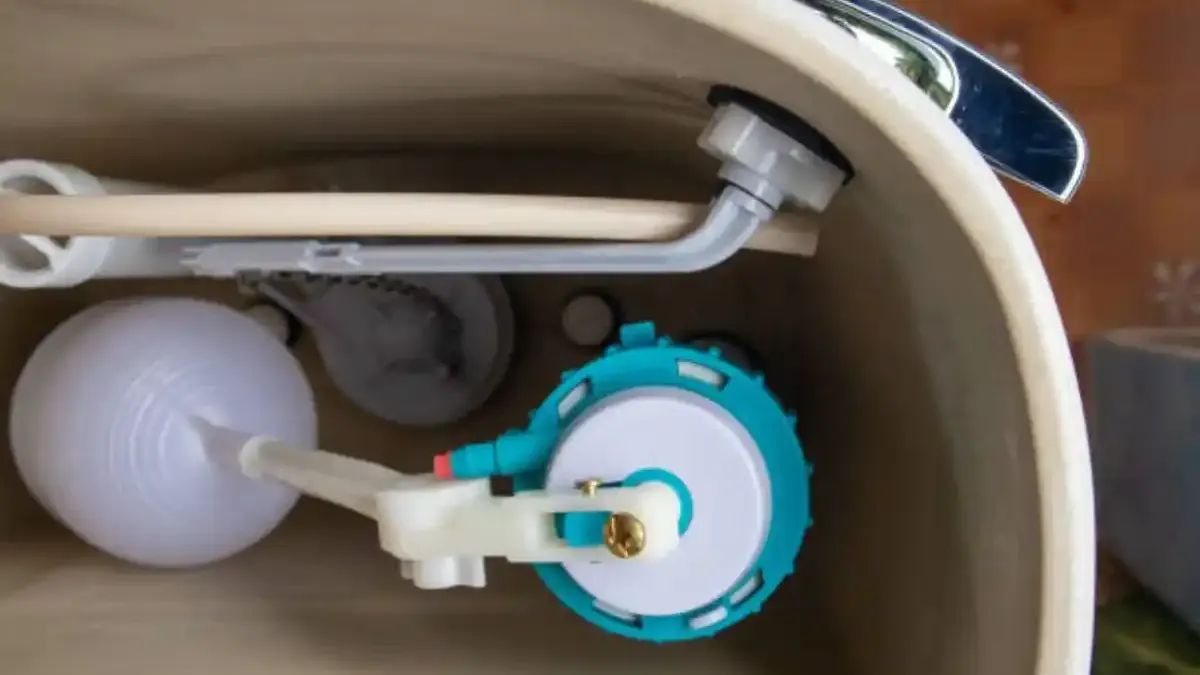
The Fluidmaster 400A is a widely sold universal fill valve for toilet tanks. It controls how water refills the tank after a flush and shuts the flow when the tank is full. When it fails, you hear hissing, the toilet runs on, or the bowl fills slowly, and the repair is usually a quick swap that costs little.
Homeowners in Maywood, IL search for it by name because it is easy to find at a hardware store and it fits many toilets. This guide explains the symptoms, the replacement steps and the points where a plumber is the better choice.
Signs the fill valve is failing
Symptoms to look for
- A constant hissing or trickling sound after the tank looks full.
- Water running into the overflow tube.
- A tank that refills very slowly or noisily.
- A toilet that never fully shuts off.
- Water bills that creep up with no other cause.
- A valve that is more than seven or eight years old.
Check the flapper first
A running toilet is not always the fill valve. A worn flapper lets water leak from the tank into the bowl, and the valve then refills the tank over and over. Add a few drops of food coloring to the tank and wait fifteen minutes. If color shows in the bowl, the flapper is leaking and needs replacing.
If the water runs into the overflow tube instead, the fill valve is not closing, or the water level is set too high. Lowering the float may solve it without a new valve.
Replacing a Fluidmaster 400A
- Close the supply and drain the tankTurn the shutoff valve clockwise, flush and sponge out the remaining water.
- Disconnect the supply lineUnscrew the coupling nut under the tank and the nut that holds the old valve.
- Remove the old valveLift it out. Clean the area and check the tank for cracks.
- Set the new valve to heightThe 400A adjusts so the top sits about an inch above the overflow tube. Twist to set the height.
- Install and tighten by handSeat the valve, tighten the locknut by hand plus a small turn and reconnect the supply line.
- Attach the refill tube and testClip the small refill tube to the overflow pipe, open the supply and check for leaks.
Mistakes that cause leaks
| Mistake | Result | Prevention |
|---|---|---|
| Over-tightening the locknut | Cracked tank | Hand tight plus a quarter turn. |
| Refill tube stuck down the overflow | Siphoning, odd noises | Clip it above the water line. |
| Wrong valve height | Water over the overflow | Set the top above the tube. |
| Reusing a cracked supply line | Leaks at the coupling | Replace the line. |
Replace the braided supply line at the same time if it is old. It costs little and prevents a leak under the toilet.
When to call a plumber
A fill valve swap is a reasonable homeowner job. Call a plumber if the tank is cracked, the shutoff valve will not close, the leak is at the base of the toilet or the toilet keeps clogging. See toilet repair for the full range of fixes.
If more than one fixture is running and the water bill is high, a hidden leak may be the cause. See leak detection.
Choosing the right replacement parts
Before buying anything, look at the existing fill valve and the shape of the tank. Most standard toilets accept a universal valve, but a few use a side-mounted or a pressure-assisted unit, and those need a specific part. Take a photo of the tank interior to the hardware store.
Buy a new supply line at the same time if the old one is rigid or stained. A braided stainless line is flexible and resists bursting. Buying a new flapper with the valve is also cheap insurance, since the two wear on the same schedule.
Check that the tank lid and the valve do not touch. A float cup that rubs the lid can stick open, and the toilet then runs without anyone noticing.
Water level and noise adjustments
The water line in the tank should sit about an inch below the top of the overflow tube. On a 400A, the adjustment screw or clip on the float cup raises or lowers that level. A level that is too high wastes water and risks overflow. A level that is too low weakens the flush.
If the valve whistles when it fills, the supply valve is probably open too far, or sediment is in the valve. Turn the shutoff valve down a little, and if the sound remains, remove the valve cap and flush the line briefly into a bucket before putting it back.
Other tank parts that wear at the same time
While the lid is off, look at the flush handle, chain and flapper. A chain that is too long can get caught under the flapper, and one that is too short lifts it slightly and lets water seep. Minerals build up on the flapper seat and prevent a seal.
If you replace the fill valve and flapper together, the toilet usually works like new. A full tank kit is inexpensive, and it is a reasonable way to treat a toilet that is more than ten years old.
What Maywood's water means for toilet parts
Maywood buys its water from Chicago, and the village's annual water report does not publish a hardness figure. Mineral buildup affects fill valves, so test your tap to learn how fast parts wear. Rubber parts in toilets typically wear faster when chloramine or minerals are present in the water, and a yearly check of the tank pays off.
The report lists a lead 90th percentile of 5.82 ppb from samples collected on August 13, 2021, below the 15 ppb action level. That is a system figure, not a statement about your fixtures.
Sources: Village of Maywood annual water quality report.
Toilet running or leaking? Call for a repair.
Call (855) 575-2890Fill valve questions in Maywood
It fits most standard toilets with a fill valve opening, but not all. Check the tank before buying.
Often seven to ten years, depending on the water.
The valve may be set too high, the refill tube may be misplaced or a flapper may be leaking.
That is a wax ring or flange issue, not a fill valve. See toilet repair.
Need a toilet fixed? Call us. Call (855) 575-2890