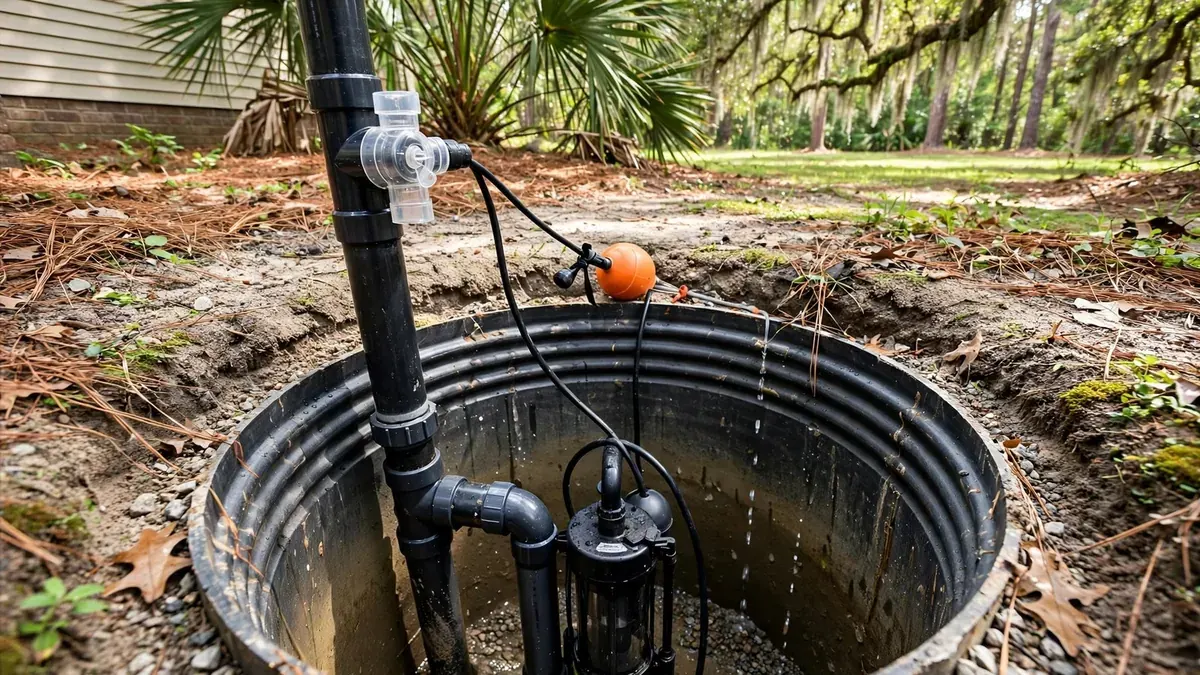
A sump pump sits in a pit in the basement floor and pumps groundwater out before it reaches the floor. The pump is only one part of the system. The pit, the float, the check valve, the discharge line and the power supply all decide whether it works in a storm.
In Maywood, IL a sump pump is more than a convenience. The village has federally declared floods, flood-prone streets and a hazard plan that names basement flooding as a recurring problem. This guide explains the steps of a proper installation and the details that people often skip.
The pit
The pit should be deep and wide enough to give the pump room and to avoid short cycling. A common pit is about eighteen inches across and two feet deep. It should be lined or made of a sealed basin, with a lid that keeps out debris and radon.
The bottom needs a stable base, such as gravel, so the pump does not draw in silt. A pit that is too small makes the pump start and stop constantly, which wears it out.
The pump and the float
Submersible pumps sit in the pit and are quieter and often more durable. Pedestal pumps sit above it and are easier to service. Either works if sized correctly. Horsepower and head rating should match the discharge height and the volume of water.
The float must move freely. A float that rubs the pit wall or a pipe is the most common reason a pump fails to start in a storm.
| Part | What to check |
|---|---|
| Pit | Size, liner and lid. |
| Pump | Size matched to need. |
| Float | Moves freely, not touching walls. |
| Check valve | Installed, facing the right way. |
| Discharge line | Sealed, sloped and clear. |
| Power | Dedicated GFCI outlet. |
Check valve and discharge line
A check valve on the discharge line stops water from flowing back into the pit after the pump shuts off. Without one the pump short cycles. A small hole drilled in the pipe below the valve lets air escape so the pump does not lock.
The line should carry water out of the house and away from the foundation, sloped so it drains and protected from freezing. It should not discharge into the sanitary sewer, where that is prohibited.
Discharge checklist
- Check valve installed above the pump, flow arrow pointing out.
- A small relief hole in the discharge pipe below the valve.
- Joints sealed and supported.
- Outlet several feet from the foundation, sloped away.
- A screen or flap at the outlet to keep pests out.
- A plan for winter ice at the outlet.
Backup power and alarms
Storms knock out power. A battery backup pump, a water powered backup or a generator keeps the pit empty when the grid fails. A high-water alarm warns you if the pump cannot keep up.
Test the whole system by filling the pit with a bucket of water, and do it again before each storm season. See sump pump repair and replacement and basement waterproofing.
Steps in an installation
- Locate the low pointThe pit goes where water collects, often along a wall.
- Cut and digThe floor is cut and the pit is excavated.
- Set the basinA gravel base and a sealed basin go in.
- Install pump, check valve and dischargeConnect and route the line.
- Patch the floor and testConcrete is patched and the system is cycled.
Maintenance that keeps a pump alive
Test the pump every few months by pouring water into the pit. Once a year, lift the pump out, clean the intake screen and the pit, check the float and inspect the discharge line. Debris in the pit is the main cause of pump failure.
Replace the pump on a schedule. Most last about ten years, and many fail during the first heavy storm after their tenth birthday. Keeping the old pump as a spare is smart, especially if you can swap it yourself.
Keep a note of when the pump was installed and when the battery was last replaced. Backup batteries typically need replacing every few years.
Radon, lids and noise
A sealed lid keeps radon and humidity from escaping through the pit, and it keeps out insects and debris. Look for a lid with a grommet for the discharge pipe and the power cord. If the lid is loose or missing, replace it.
Pumps make some noise, but a pump that rattles, hums loudly or runs without moving water is sending a warning. A noisy pump can mean a worn bearing or a clogged impeller, and it should be serviced before it fails.
Choosing between a submersible and a pedestal pump
A submersible pump sits in the pit and is cooled by the water around it. It is quiet, handles debris better and is the usual choice for finished basements. A pedestal pump has its motor above the pit, which makes it easy to reach and service, but it is louder and has a shorter life.
Cost matters, but not as much as reliability. Consider a cast iron body for heat dissipation, a switch that is protected from debris and a warranty that covers more than a year or two.
Cost and time expectations
A pump replacement in an existing pit is usually a short visit. A new pit, with cutting and patching the floor, takes a day or more. Prices depend on the pump, the pit and the discharge run, so ask for the estimate in writing, with each item listed.
Plan the work before storm season, when plumbers are busy and pumps are in demand.
Code points for a sump install
Install a sump pump on a GFCI protected circuit under the National Electrical Code (NEC), and send the discharge where the Illinois Plumbing Code and village rules allow. UPC and IPC model language agrees that a sump should not drain to the sanitary sewer.
What to do before the install
Sump install safety steps
- Unplug the old pump before touching it.
- Do not stand in water near the outlet or the cord.
- Use a GFCI outlet and keep the plug above the floor.
- Test the new pump by pouring water into the pit.
- Plan battery backup for storm power cuts.
Maywood's flood record
FEMA declared disasters covering Maywood for flooding in May 2013 (DR-4116) and November 2023 (DR-4749), and flash flooding on August 4, 2014 caused about $150,000 in damage. The Cook County hazard plan lists flood-prone locations including Hugh Muir Lane, the 17th Avenue railroad crossing, 9th Avenue and Warren, 2nd Avenue and Pine and 13th Avenue.
The plan also describes a proposed check-valve program of about $16 million and three FEMA repetitive-loss properties in the village. A well installed sump pump is the part a homeowner controls.
Sources: FEMA disaster declarations DR-4116 and DR-4749 and Cook County Multi-Jurisdictional Hazard Mitigation Plan, Maywood annex.
Want a sump pump installed to last? Call us.
Call (855) 575-2890Sump pump installation questions in Maywood
Ask the Village of Maywood building department. Discharge and electrical work may need approval.
It depends on the water volume and the discharge height. The plumber sizes it.
Generally no. Keep it separate from the sanitary sewer.
If storms often knock out power in your area, yes.
Yes. See Melrose Park and Broadview.
Ready to protect your basement? Call us. Call (855) 575-2890