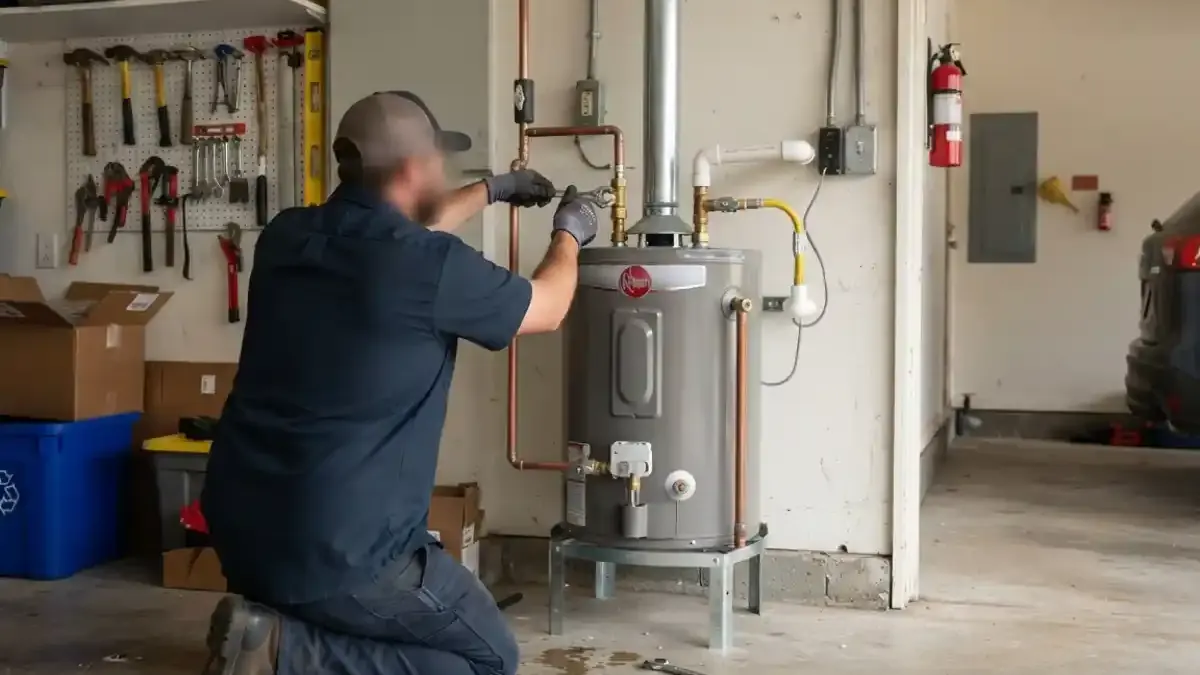
Every tank water heater has a temperature and pressure relief valve, which opens if the tank gets too hot or the pressure climbs too high. The discharge pipe carries that hot water or steam safely away. It is a small piece of pipe with a very important job, and it is often installed wrong.
In Maywood, IL older heaters may have a short stub, a capped line or a pipe that ends in a bucket. This guide explains what a correct discharge pipe looks like and why you should not skip it.
What the relief valve and pipe do
The relief valve is the last safety. If a thermostat fails and the water overheats, or if pressure rises, the valve opens and releases water. Without a pipe, that water sprays out at scalding temperature and can burn someone nearby.
The discharge pipe directs the release downward to a safe place, usually a floor drain or outside, and it must not be blocked or reduced. If the valve never opens, the pipe never sees water, but you want it correct for the one day it does.
Rules of thumb for installation
Codes vary, but common requirements are the same across most of the country, and the Illinois Plumbing Code governs the details here. The pipe should be at least as large as the valve outlet, run downward without traps, end within a short distance of the floor or a drain and have no valve or cap on the end.
| Requirement | Why |
|---|---|
| Same size as the valve outlet | Allows full flow. |
| Runs downhill | Water drains freely. |
| Ends near a drain or outdoors | Keeps scalding water away from people. |
| No threads or cap on the end | Nothing can block the discharge. |
| Approved material for hot water | Resists heat. |
Common mistakes
Mistakes to fix
- Capping or plugging the discharge opening.
- Running the pipe uphill or with a low sag.
- Using a material not rated for hot water.
- Ending the pipe where it can spray at a person.
- Reducing the pipe size.
- Connecting the discharge into a drain pipe without an air gap.
Installation steps
- Shut off power or gas and the waterClose the cold supply and relieve pressure.
- Check the valveMake sure the relief valve is rated for the tank and is not leaking.
- Measure the routePlan a straight downward path to a drain or exterior.
- Install approved pipeUse pipe rated for hot water, with proper fittings.
- TestLift the valve lever to confirm water flows out and the pipe is clear.
A dripping discharge pipe
If water drips from the pipe, the relief valve is releasing small amounts. The cause may be high pressure from a failed expansion tank, a worn valve or a heater running too hot. A plumber diagnoses which. See water heater repair and water heater installation.
What to do when the valve opens
If you ever see water or steam coming from the discharge pipe, stay clear of it. The water is hot enough to scald. Turn off the heater's power or gas at the control, and close the cold water supply to the tank if you can reach it safely.
Do not cap the discharge or plug the valve. A valve that opens is doing its job, and the question is why. It may have been overheating, excessive pressure or a failed valve. Call a plumber to find out which.
Testing the relief valve
Manufacturers often recommend lifting the valve's lever once a year to confirm it opens and reseats. Stand clear, place a bucket under the discharge and lift the lever briefly. Water should flow, then stop when you release it.
If the valve drips afterward or does not flow, it needs replacing. A valve that has not moved in years can seize, and a seized valve cannot protect you. Replacing it is a quick job, and it is inexpensive compared with the risk.
Materials commonly used for the pipe
Copper is a common material, since it handles heat and is easy to cut and fit. CPVC rated for hot water is also used where codes allow. Ordinary PVC is not suited to hot water and can soften or fail.
Whichever material is used, the pipe should be supported so it does not sag, and its end should be visible so a drip can be seen. Ask the plumber to confirm that the material, size and termination meet the rules that apply to your house.
Special cases
In an attic, a closet or a finished room, a drain pan under the heater catches leaks, and the pan's own drain line must run to a safe place. A heater above a living space needs particular care, since a failed valve can flood the rooms below.
If no floor drain is nearby, the discharge may have to run outdoors. A plumber can plan a route that meets the rules and keeps the pipe from freezing.
Who should install it
Because the discharge pipe is a safety item, have a licensed plumber install or inspect it, even if you replace the heater yourself. A quick look at the relief valve, the pipe's slope and its end point takes minutes and can prevent an injury. Ask the plumber to show you where the pipe ends and how to test the valve.
The code and the village
The Illinois Plumbing Code, Title 77, Part 890 of the Illinois Administrative Code, is the state standard for plumbing work, and plumbers must be licensed. The Illinois Department of Public Health provides an online tool to verify a license.
The Village of Maywood building department reviews permits, with the first review taking about three business days. Ask the village whether a water heater replacement in your house needs a permit and an inspection of the discharge pipe.
Sources: Illinois Administrative Code Title 77, Part 890 and Illinois Department of Public Health and Village of Maywood building department.
Heater piping look wrong? Call us.
Call (855) 575-2890Discharge pipe questions in Maywood
No. A capped discharge can turn a valve release into a hazard.
A failing expansion tank, high pressure or a worn valve may be the cause.
A material approved for hot water, such as copper. Ask your plumber.
Near a floor drain or outdoors, a few inches above the surface, without a cap.
Need your heater's piping checked? Call us. Call (855) 575-2890