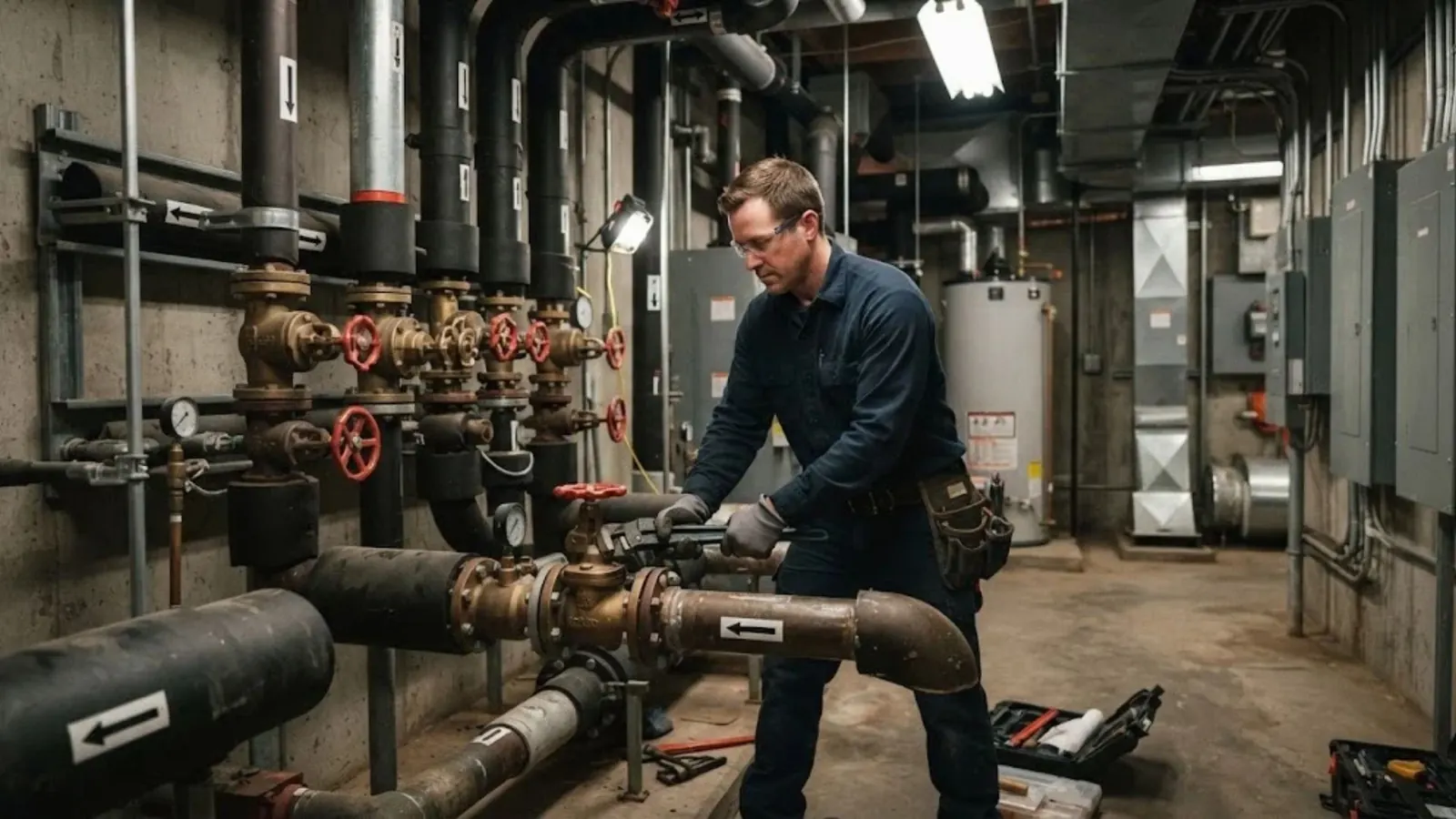
Commercial plumbing in Maywood, IL covers backups, leaks, water heater failures, restroom fixtures, floor drains, grease problems and routine maintenance for shops, restaurants, offices, medical practices, churches and multifamily buildings.
A plumbing problem in a business is different from one in a house. It can stop service, trigger a health department closure or flood a neighbor's space. The plumber's priority is to stop the damage and get the business open again.
Business plumbing emergency: first steps
If water is flooding the space, close the main shutoff and stop operations in the affected area. If a drain is backing up, stop using sinks and toilets. In a restaurant, stop dishwashing until the line is cleared.
Tell the dispatcher the type of business, what failed and whether any customers or tenants are affected. That lets the plumber plan the tools and crew before arriving.
Before the plumber arrives
- Close the main water shutoff and any local shutoff for the failed fixture.
- Stop using drains that are backing up.
- Move inventory, equipment and paper records away from water.
- Photograph the damage and note the time for insurance.
Where commercial plumbing differs
Commercial buildings have larger pipes, higher demand and more fixtures, and they are subject to codes that go beyond residential work. Backflow prevention, grease interceptors, floor sinks and ADA fixtures all come into play.
Maywood has a mix of older storefronts on Lake Street, Madison Street and 1st Avenue, offices, medical facilities such as Loyola University Medical Center, and apartment buildings. Each has a different plumbing profile, and the plumber matches the approach to the building.
Common commercial problems
| Problem | Typical cause | Fix |
|---|---|---|
| Restaurant drain backup | Grease and food buildup | Hydro jetting, grease line cleaning. |
| Restroom overflow | Heavy use, flushed wipes | Drain cleaning, tenant guidance. |
| No hot water | Water heater or recirculation failure | Water heater repair. |
| Floor drain smell | Dry trap or partial clog | Prime the trap, clean the drain. |
| Main line backup | Roots or collapse | Sewer line cleaning, camera inspection. |
Preventive maintenance for businesses
A regular maintenance visit costs less than a closure. Scheduled drain cleaning, water heater checks, backflow device testing and fixture inspections catch problems when they are small.
A basic maintenance plan
- Grease trap and interceptor cleaning on schedule.
- Hydro jetting of kitchen and main lines on a routine.
- Backflow assembly testing where required.
- Water heater and boiler inspection before winter.
- Floor drain priming and cleaning.
- Restroom fixture checks for leaks and running toilets.
How an emergency commercial call runs
- Triage by phoneThe dispatcher gathers the building type, the problem and any urgency.
- Stop the damageThe plumber closes the water, clears the stoppage or contains the leak.
- DiagnoseThe cause is found with a camera, a pressure test or inspection.
- Repair or recommendYou get a clear price for a lasting fix, with the temporary fix done first when needed.
- DocumentYou receive a written account for your landlord or insurer.
Tenants, landlords and permits
In a leased building, responsibility for plumbing is set by the lease, and the landlord often controls the main lines. Tell the plumber who the property manager is so the right party approves the work.
Commercial plumbing work usually needs a permit from the Maywood building department, and the Illinois Plumbing Code applies. Plumbers must be licensed by the state, and you can check a license through the Illinois Department of Public Health.
Records, inspections and keeping the doors open
Keep a simple file for the building: the location of every shutoff, the date of the last drain cleaning, the make and age of each water heater and the backflow test reports. In an emergency the plumber can act faster with that file in hand.
Restaurants and medical offices may face health inspections. A plumber who documents repairs with dates and photos helps you answer an inspector's questions without delay.
Codes that apply to commercial plumbing
Illinois has its own state plumbing code, Title 77 Part 890 of the Illinois Administrative Code, rather than adopting the UPC or the IPC as written. Commercial work adds backflow protection on cross connections and the accessible fixture rules of the 2010 ADA Standards for Accessible Design. We check a scope against each before a price is given.
What to do before we arrive
Before a commercial service call
- Close the main shutoff or the affected branch valve.
- Keep staff and customers away from wet floors and cordon off the area.
- Note the fixtures that are affected and when the problem began.
- Do not use chemicals in a backing up drain, since they can splash on staff.
- Call 911 for a gas smell or a flooded electrical room.
Business plumbing coverage
Commercial calls come from Maywood 60153, Melrose Park 60160 and 60164 and Forest Park 60130, along corridors such as Madison Street and North Avenue. Give the dispatcher the building type, the problem and a contact who can approve the work.
What changes the price of commercial plumbing
Commercial jobs vary widely, and the plumber gives a clear price before starting work whenever the situation allows.
Business interruption coverage and property policies differ, so check yours. Want your real number? Call (855) 575-2890.
Business plumbing down? Call the 24/7 line.
Call (855) 575-2890Commercial plumbing questions in Maywood
Yes. The 24/7 line is answered around the clock, and business calls are triaged by urgency.
Yes. Grease, drains and water heaters are common restaurant calls, and hydro jetting keeps kitchen lines clear.
That depends on the lease. Tell the plumber who the property manager is.
Ask about a maintenance schedule when you call. Regular service often costs less than emergency visits.
See sewer line repair and sewer line cleaning.
Business plumbing emergency? Call now. Call (855) 575-2890