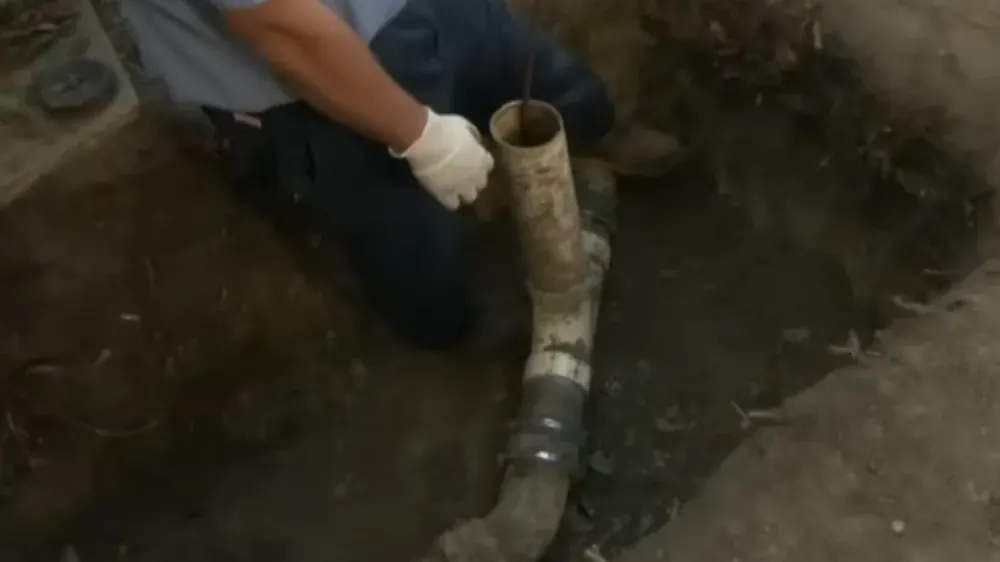
Epoxy sewer pipe lining, also called cured-in-place pipe, is a trenchless way to repair a damaged sewer line. A flexible tube soaked in resin is pulled or inverted into the old pipe, inflated and cured. The result is a new pipe inside the old one, with a smooth wall and no joints for roots to enter.
For many homes in Maywood, IL, lining is attractive because the damaged pipe may run under a driveway, a porch or a mature tree. Digging a trench there is costly and messy. Lining is not always possible, and the camera inspection decides.
How the lining process works
- Camera inspectionA camera maps the pipe and finds cracks, offsets and root intrusion. See sewer inspection.
- CleaningRoots, scale and debris are cleared with a cutter or hydro jetting.
- Insert the linerThe resin-soaked liner is pulled in or inverted through a cleanout or an access pit.
- CureThe liner is inflated against the old pipe and cured with hot water, steam or light.
- Reinstate and verifyBranch connections are reopened and a camera confirms the finished pipe.
When lining is a good fit
Lining works well when the host pipe is still roughly round and continuous, with cracks, small holes, root intrusion at joints or minor offsets. It suits clay, cast iron, concrete and Orangeburg pipe in a range of sizes.
Good candidates for lining
- Cracked or leaking joints with the pipe still in line.
- Recurring root intrusion at joints.
- Difficult access, such as under a driveway or large tree.
- A pipe in fair shape structurally.
- A homeowner who wants less surface disturbance.
When it is not
| Condition | Why lining struggles | Usual choice |
|---|---|---|
| Collapsed pipe | The liner cannot pass | Dig and replace. |
| Large belly or sag | A liner follows the sag, water still pools | Replace the section. |
| Severe offset | Liner may not seat well | Spot repair first. |
| Multiple tight bends | Liner cannot negotiate them | Excavate. |
Honest contractors will tell you when lining will not work and why. If someone proposes it without a camera inspection, ask for one.
Cost, warranty and what to ask
Lining is often priced per foot and varies with pipe diameter and access. Compare it with the cost of excavation, restoration of the surface and the time without a working sewer. Ask for the resin type, the warranty length and who covers the liner if it fails.
Ask also whether the lining is the full length of the damaged run or only a spot repair. A long lined run gives roots no way back in, which is the main long-term advantage.
After the lining
A lined pipe still needs maintenance. Keep grease and wipes out of the drain, and have a camera check done after a few years. If you want to compare, see sewer line repair for digging options and sewer line cleaning for maintenance.
Questions to ask a lining contractor
Not all liners are the same. Ask what resin and what felt or fiberglass material the contractor uses, how long the cure is and whether the finished liner is tested. Ask for the camera video before and after, so you can see the pipe in both states.
Ask about the company's experience with your pipe type and diameter. A four inch house lateral is a different job from a six inch main line, and the curing equipment differs. Ask also how the connections to branch lines, such as the kitchen or a floor drain, are reopened.
Finally, ask what happens if the liner does not seat properly. A good contractor has a plan, which may include cutting the failed liner out and starting over.
What lining does not change
Lining repairs the pipe. It does not increase the pipe's capacity, and the new wall slightly reduces the inside diameter. In most house laterals that loss is small and the smoother wall offsets it, but in a pipe that is already marginal it matters.
It also does not fix a problem elsewhere in the system. If the house drain is clogged by flushed wipes, or if the public sewer backs up in a storm, the lined pipe will still back up. Keep that in mind, and combine lining with maintenance and, where it fits, a backwater valve.
Lining compared with other trenchless options
Lining is not the only way to avoid a trench. Pipe bursting pulls a new pipe through the old one while breaking it apart, which restores full diameter and suits pipes that have collapsed in places. It needs entry and exit pits, but far less digging than a full trench.
Spot repairs patch a single damaged section with a short sleeve. They cost less and suit a pipe with one defect, but they leave the rest of the pipe as it was. The right choice depends on what the camera shows, which is why inspection comes first.
Preparing your house for a lining job
Clear access to the cleanout or the basement drain where the work begins. Tell everyone in the house not to use water during the cure, which can take several hours. Arrange for the plumber to know where the sewer cleanout and any floor drains are before the day.
Ask for a schedule and for a plan to restore the pipe's use quickly. A well-run lining job usually finishes in a day, with the line back in service afterward.
The standard behind cured in place lining
Cured in place pipe lining is described by ASTM F1216 for inversion and ASTM F1743 for pull in place. Asking whether a contractor follows the relevant ASTM method is a fair way to compare quotes.
What to do before a lining job
Before the lining crew arrives
- Stop using water so the line stays empty during cleaning.
- Ask about the cure time and when fixtures can be used.
- Open the cleanout and clear the access.
- Ventilate the work area, since resin has strong fumes.
- Keep children and pets out of the work zone.
Maywood's sewers and why lining comes up
The Cook County hazard mitigation plan notes that Maywood has basement backups from undersized sewers and a combined sewer area near I-290. In 2022 the village repaired 19 sewer structures. Those are village assets, separate from the lateral that connects your house to the street, but they show how much of the sewer system in the area is aging.
Your own lateral is the owner's responsibility. If a camera shows damage, lining is one of the options, and Maywood's building department can tell you what permit applies to the work.
Sources: Cook County Multi-Jurisdictional Hazard Mitigation Plan, Maywood annex and Village of Maywood 2022 system work summary.
Want a camera look and a straight answer on lining? Call us.
Call (855) 575-2890Pipe lining questions in Maywood
Manufacturers cite decades of service life. Ask your contractor for the warranty in writing.
No. Collapsed pipes and some severe offsets cannot be lined.
Sewer work usually does. Ask the Village of Maywood building department.
It depends on the length and access. Lining often wins when digging would mean tearing up concrete or landscaping.
Yes. See Forest Park and Melrose Park.
Need a sewer line evaluated? Call us. Call (855) 575-2890