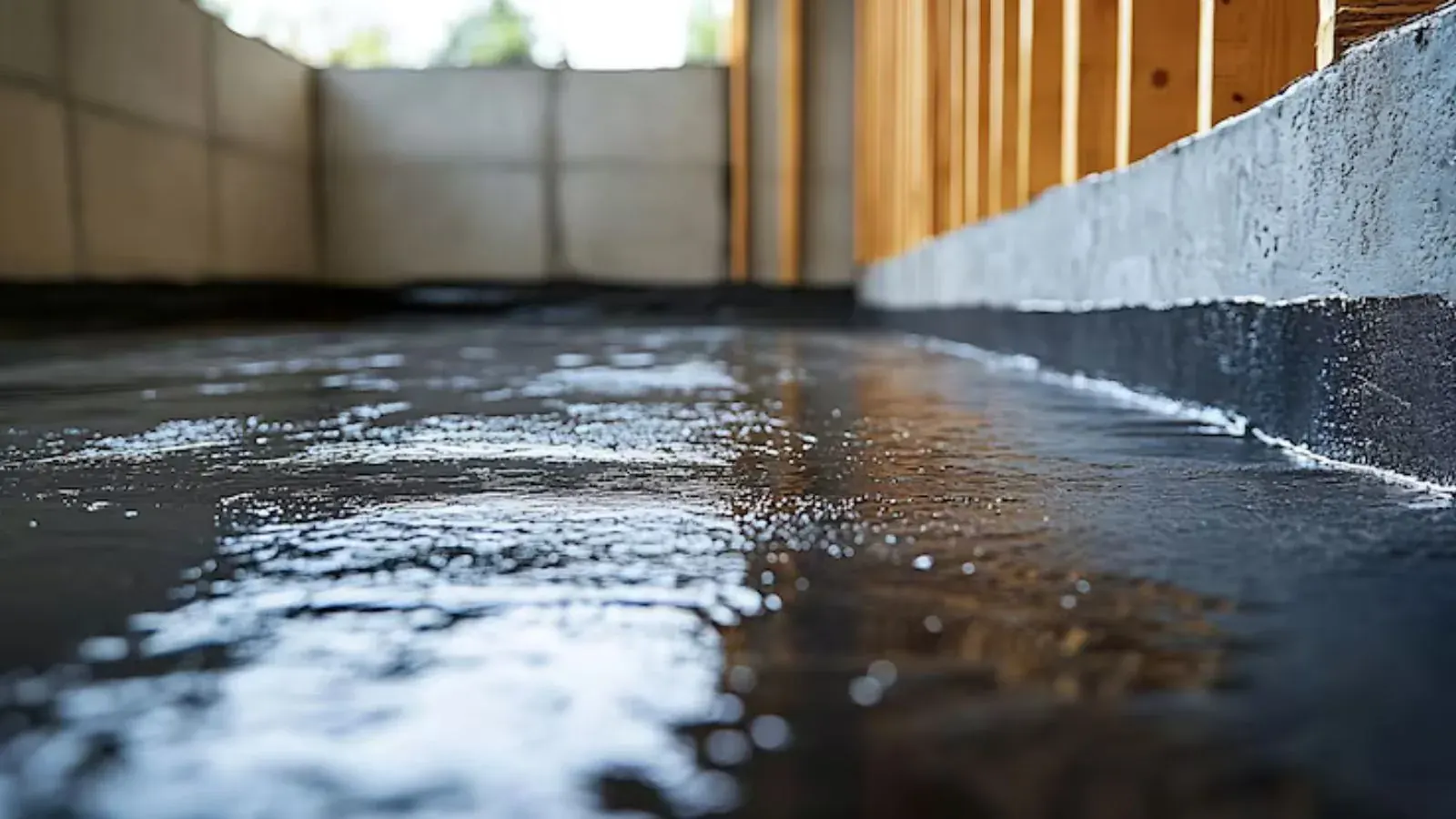
An old basement, with a stone, brick or poured concrete foundation, tends to leak through joints, cracks and the porous walls themselves. Water can come from rain that collects against the wall, from a high water table or from a sewer that backs up. Each needs a different fix.
Many houses in Maywood, IL were built before modern waterproofing existed. This guide walks through the sequence that makes sense, starting with low cost steps and moving to bigger ones only when they are needed.
Find the source before spending money
Walk the basement after rain and note where water appears. A wet line at the base of a wall is groundwater pressure. A damp patch under a window is a window well. Water at a floor drain is sewage and needs a different response. A musty smell with no visible water may be humidity.
| Where water shows | Likely cause | First step |
|---|---|---|
| Along the wall base | Groundwater | Check gutters and grading. |
| Under a window | Window well | Clear and drain the well. |
| Through a crack | Foundation crack | Seal the crack, check the exterior. |
| Floor drain | Sewer backup | Install a backwater valve. |
| Everywhere damp | Humidity | Dehumidify and ventilate. |
Outside first
Most water problems start outside. Gutters that overflow, downspouts that dump next to the wall and soil that slopes toward the house all push water against the foundation. Fixing those is inexpensive and often solves the problem.
Extend downspouts several feet away, regrade the soil to slope away from the house and clear window wells. Check that sidewalks and driveways do not slope toward the foundation.
Low cost exterior fixes
- Gutters clean and securely mounted.
- Downspouts extend several feet from the wall.
- Soil slopes away from the house.
- Window wells are clear and drain properly.
- Cracks in nearby concrete are sealed.
- No downspout discharges into a window well.
Inside: drainage and pumping
If water still enters, an interior drain tile and a sump pump are the standard next step. The tile collects water at the base of the wall and leads it to a pit where a pump sends it outside. This is covered in detail under basement waterproofing and sump pump service.
Coatings and paints can help with damp walls, but they do not stop pressurized water, and they can trap moisture. Use them as a finish, not a fix.
Stone and brick foundations
Older foundations may be stone, rubble or brick with lime mortar. Hard, cement-based coatings can trap moisture in these walls and speed decay. A mason can repoint failing joints with a compatible mortar, and drainage is usually better than a coating.
If a wall is bowing, cracking in a stair-step pattern or losing mortar, have a structural professional look at it before spending on waterproofing.
Guard against sewer backup
In older areas, floods and sewer backups often come together. A backwater valve on the building drain keeps wastewater from rising into the basement. Keep floor drains clear, and have the lateral inspected if backups recur. See sewer inspection and sewer line cleaning.
Humidity, condensation and mold
Not all basement dampness is a leak. In summer, warm humid air meets cool walls and condenses. That moisture feels like seepage but comes from the air. A dehumidifier, kept at around fifty percent humidity, solves most of it.
If you find mold, clean small areas with detergent and water and fix the moisture source. Large areas or mold that returns need a professional assessment. Do not paint over wet masonry. Paint peels and hides the problem.
A simple hygrometer costs little and tells you whether humidity is the issue.
A sensible budget order
Spend first on what is cheap and effective: gutters, downspouts, grading and window wells. Spend second on a sump pump and backup. Spend third on interior drain tile where a persistent wall leak remains. Spend last, and only if needed, on exterior excavation.
Taking the steps in that order avoids paying for an expensive system when a downspout extension would have solved it. A plumber who offers only the biggest option first is not giving you the full picture.
Working with a contractor
Get at least two opinions, and ask each contractor to name the source of the water before proposing a fix. Be cautious of anyone who recommends the same expensive system without looking at the outside of the house. Ask for a written scope, a warranty and whether it transfers if you sell.
Ask who will handle permits and whether the work touches the sewer or plumbing. If it does, a licensed plumber should do that part.
After the work is done
Watch the basement through the next two heavy rains. Note any new damp spots and photograph them. Test the sump pump and check the discharge outlet outside. If water still appears, call the contractor while the warranty is fresh.
Store belongings on shelves off the floor, and keep a dehumidifier running in humid months.
When to call a structural professional
Call an engineer or a qualified mason if a wall bows inward, if horizontal cracks appear in block walls or if cracks widen over months. Water is sometimes a symptom of movement, and sealing the surface will not stop the wall from shifting. A short inspection report is inexpensive compared with the cost of an unnecessary system.
Maywood's old housing and flood risk
The Maywood Company was formed in 1868 and built more than 100 houses in 1872, and the village was organized in 1881, so much of its housing is old. The Cook County hazard plan lists basement backups from undersized sewers, mains installed before 1920 and a combined sewer area near I-290.
A proposed check-valve program of about $16 million and three FEMA repetitive-loss properties are in the plan. If your basement floods more than once, speak with the village about programs, and look at drainage, a sump pump and a backwater valve together.
Sources: Cook County Multi-Jurisdictional Hazard Mitigation Plan, Maywood annex and Village of Maywood history.
Basement leaking? Call for a plan.
Call (855) 575-2890Old basement questions in Maywood
You can do exterior grading and gutters. Drainage and structural work are best left to professionals.
Rarely. It does not stop pressurized water.
No. That needs a backwater valve or an overhead sewer.
A wide, growing or stair-step crack should be looked at by a structural professional.
Yes. See Forest Park and Bellwood.
Ready to dry out an old basement? Call us. Call (855) 575-2890